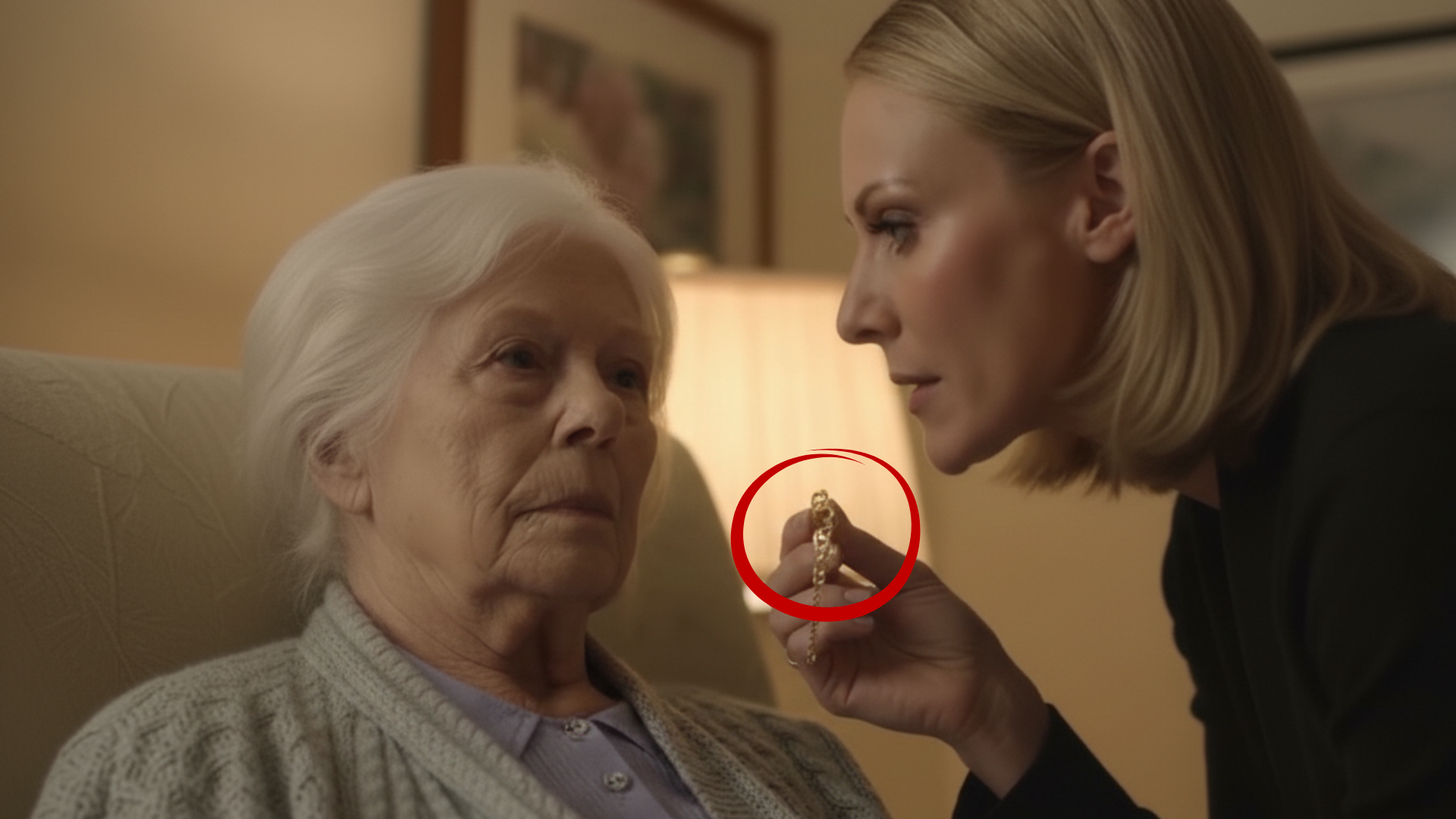
The nursing home director thought she'd found the perfect mark—a confused elderly woman with expensive jewelry and no memory. But Helen was a retired FBI art crimes investigator who'd been filming everything for six months. Full story in the comments.
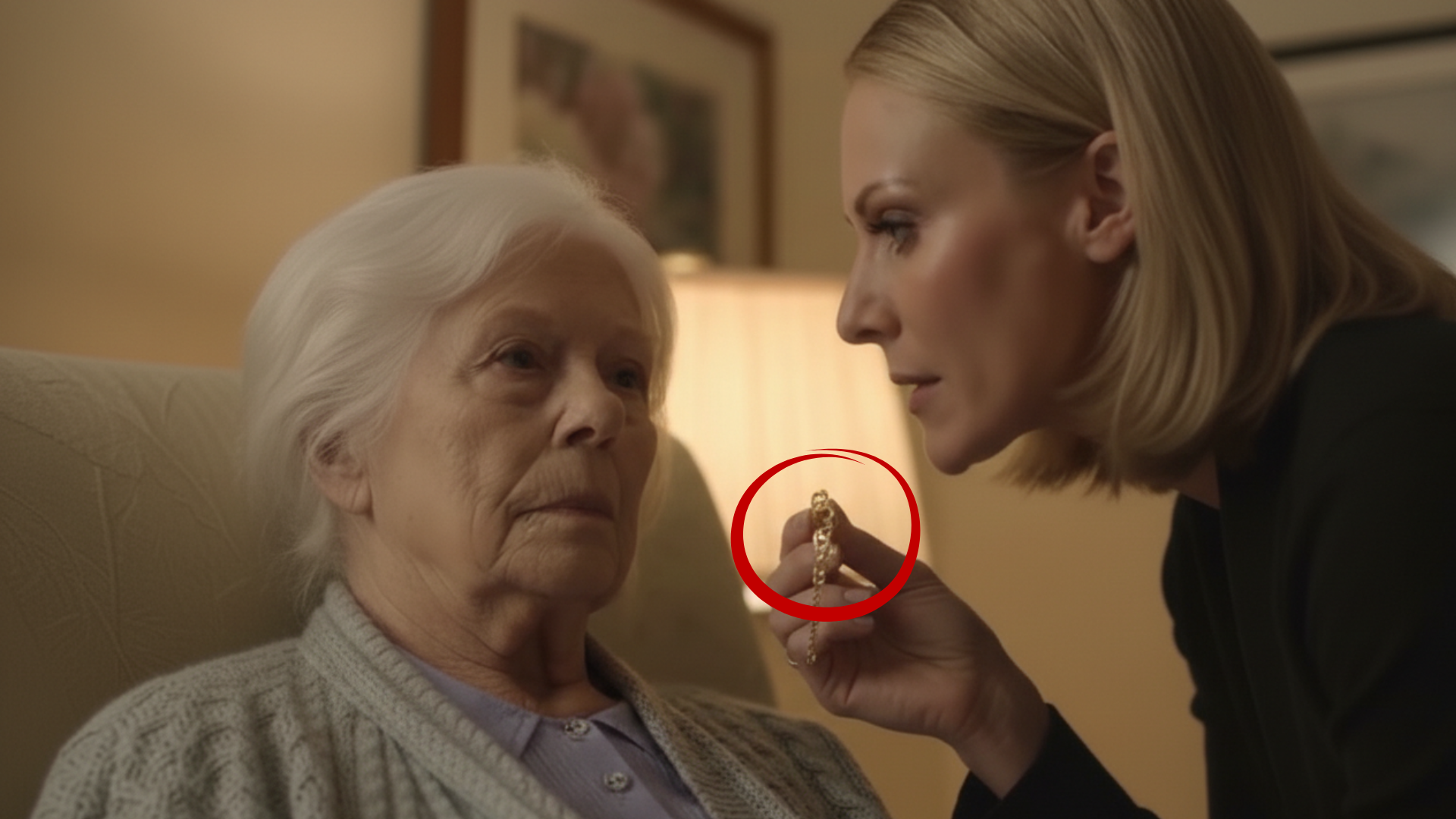
Patricia stood in the doorway of Room 347, watching Helen fumble with a pill organizer. The old woman's hands trembled as she tried to open Tuesday's compartment.
“Let me help you with that, dear,” Patricia said, her voice dripping with false sweetness.
Helen looked up, her rheumy eyes unfocused. "Oh… thank you. I can't seem to… what day is it?"
"It's Wednesday, Helen. Wednesday."
As Helen swallowed her pills with shaking hands, Patricia's gaze drifted to the antique vanity. A ruby bracelet sat there, catching the afternoon light.
"That's a pretty piece,” Patricia said casually. “Where did you get it?"
Helen's face went blank. "I… I don't remember. Did my daughter give it to me?"
"Your son visits, Helen. You don't have a daughter.” Patricia moved closer to the vanity. “This looks like costume jewelry. The clasp is loose—it might fall off and get lost. Why don't I put it somewhere safe for you?"
“Safe?” Helen blinked slowly. “Yes… yes, that would be good.“
Patricia slipped the bracelet into her pocket, making a note on her tablet. Another easy score. She'd learned years ago that residents with dementia were goldmines. They forgot what they owned. Their families rarely inventoried belongings. And who would believe a confused old woman anyway?
“You rest now, dear,” Patricia said, patting Helen's shoulder.
As Patricia left, Helen's trembling stopped. Her unfocused eyes sharpened. She waited until the door clicked shut, then reached under her mattress and pulled out a small notebook. In clear, steady handwriting, she wrote: “Wednesday, 2:47 PM. Ruby bracelet. Patricia Hendricks. Camera angle 3 should have captured it.“
Helen had been many things in her life. An FBI agent. An art crimes investigator. A woman who'd spent forty years tracking down thieves who thought they were smarter than everyone else.
Dementia hadn't taken that away. Not yet. The doctors said her symptoms were mild, manageable. But Patricia didn't need to know that.
Helen had been watching Patricia for six months now. The way she eyed jewelry. The way residents' belongings disappeared after Patricia's rounds. The way she always volunteered to “help” with estate planning when residents passed away.
So Helen had set a trap. With her son Michael's help, she'd installed hidden cameras in her room—tiny ones, FBI-grade, invisible to the untrained eye. She'd played up her confusion, made herself seem like an easy mark.
And Patricia had taken the bait every single time.
Three floors down in the security office, a young nurse named Amanda watched the monitors. She saw Patricia enter Room 347. Saw her take the bracelet.
Amanda's stomach churned. "Patricia's at it again," she muttered.
Her supervisor Marcus looked over. “What?“
“Nothing.” Amanda bit her lip. She'd reported suspicions once before. Patricia had nearly gotten her fired, claimed Amanda was spreading malicious rumors to cover her own theft.
Patricia had been director for fifteen years. She had power. Connections. Board members in her pocket.
But this time, Amanda pulled out her phone and took a photo of the monitor screen. Just in case.
That evening, Helen's son Michael arrived for his regular visit. He was tall, fit, forty-five, with his mother's sharp eyes. He worked as a federal prosecutor.
“How are you, Mom?” he asked, kissing her forehead.
Helen waited until he closed the door. Then her posture straightened. Her voice lost its tremulous quality. "I got her on camera again. The ruby bracelet. That's the fifteenth piece in six months."
Michael pulled out his laptop. “Show me.“
Helen retrieved a small tablet from her nightstand drawer—hidden behind photos of grandchildren. She'd been uploading footage to a secure cloud drive, organizing it meticulously. Dates. Times. Descriptions.
Patricia had no idea she'd been building a federal case against herself.
They watched the footage together. Patricia's face was clear. Her actions were deliberate. Her words were damning.
"That's enough,” Michael said quietly. “We have enough now."
“No.” Helen's voice was steel. "Not yet. I want everyone. She's not working alone—I've seen the way the night shift supervisor covers for her. I've heard conversations. This is bigger than one director stealing trinkets."
“Mom, some of those pieces are worth thousands. That Cartier bracelet alone—“
“Is worth two hundred thousand dollars,” Helen finished. "I know exactly what everything is worth. That's why I documented every piece before I moved in here. Patricia thinks I'm some confused old woman who doesn't know Cartier from Claire's. That's her mistake."
Michael smiled despite himself. "Two more weeks. Then we move, regardless. I'm not risking your safety for a bigger case."
“Agreed.” Helen's hand shook slightly as she took a sip of water—the tremor was real, a reminder that she wasn't invincible. “But I want to be there when you arrest her. I want to see her face.“
“That can be arranged.“
Two weeks later, Patricia was in her office when her assistant knocked. "Ms. Hendricks? Helen Carlisle's son is here with… um… several people."
Patricia's stomach dropped. She'd sold that ruby bracelet online three days ago. Gotten eight thousand for it. But the buyer was legitimate, the listing was generic, there was no trail—
She opened her door with a professional smile. Michael stood there with four FBI agents in windbreakers.
Her blood turned to ice.
"Michael, what's—"
"Patricia Hendricks, I'm Special Agent Torres with the FBI. We have a warrant to search your office and your home.” Agent Torres handed her the paperwork. “We're also executing warrants at your residence and your storage unit on Grove Street."
Storage unit. Patricia's hands went numb. How did they—
"You're kidding,” she said, forcing a laugh. “This is absurd. What am I supposed to have done?"
“Theft, wire fraud, elder abuse, and trafficking in stolen goods,” Michael said coldly. “Among other charges.“
"Based on what? Some confused old woman's delusions?" Patricia's voice rose. "Your mother has dementia, Michael. She doesn't know what she owns. She probably gave those items away and forgot—"
“Actually, I know exactly what I own.“
Patricia spun around. Helen stood in the hallway, flanked by two more agents. But this wasn't the Helen who shuffled and forgot words. This Helen stood straight. Her eyes were laser-focused.
“Vintage Cartier bracelet, circa 1935, purchased at auction in 1998 for sixty thousand dollars,” Helen said clearly. “Ruby bracelet, late Victorian era, appraised at fifteen thousand. Emerald pendant, Art Deco period, thirty-two thousand. Shall I continue?“
Patricia's mouth opened and closed. "You… you're faking? This whole time?"
“Oh, I have mild cognitive impairment. The doctors are very clear about that. But dementia?” Helen smiled coldly. “That was performance art. And you fell for it.“
Agent Torres stepped forward. "Helen Carlisle spent forty years with the FBI's Art Crimes unit. She's recovered over three hundred million dollars in stolen artwork and jewelry. Did you really think she wouldn't notice her own pieces going missing?"
“We have six months of footage,” Michael added. "Every theft, clearly documented. We also have your eBay account, your Craigslist listings, your bank deposits. We've traced sales of twenty-three items belonging to eight different residents."
Patricia's legs nearly gave out. “Eight?“
“Twenty-three residents total,” Agent Torres corrected. "But we've only confirmed theft from eight so far. We're still investigating the others. Some families didn't keep records. Some residents have actually passed away. But we'll find everything."
"And then there's your night shift supervisor, Karen Mills,” Helen said. “She's been your fence, hasn't she? Taking items you couldn't sell yourself. We have her on camera too, thanks to Amanda in security."
Amanda had come forward with her own evidence three days ago, once she learned what Helen was doing. Two years of suspicions, finally validated.
“Your storage unit was the clincher,” Michael said. "Forty-seven pieces of jewelry you hadn't sold yet. You know what you called it in your rental agreement? 'Estate items for resale.' You documented your own crime."
Patricia's professional mask cracked. "I've worked here for fifteen years. I've dedicated my life to these people—"
"You've stolen from vulnerable elderly people for fifteen years,” Helen interrupted. “You targeted residents with cognitive decline because you thought we were easy marks. You thought nobody would believe us. You thought nobody would care."
“The total value of confirmed thefts is over nine hundred thousand dollars,” Agent Torres said. "That's federal prison time, Ms. Hendricks. A lot of it."
Two agents moved forward with handcuffs. Patricia's face went white. “Wait. Wait. I can cooperate. I can tell you about others—there are other facilities, other directors doing the same thing. I can give you names.“
“Oh, we know,” Helen said. "You think I only investigated you? I've been filing reports across three states. You're just the first domino."
As they led Patricia away in handcuffs, residents began emerging from their rooms. Mrs. Chen from 351. Mr. Rodriguez from 328. They'd all been watching, all been waiting.
“Is it true?” Mrs. Chen asked, her voice shaking. “Did she really steal from us?“
“She did,” Helen said gently. "But we got it back. Almost everything. And she's going to prison."
Mrs. Chen started crying. "My mother's wedding ring. She took it six months ago. She said I'd probably lost it myself, that I was getting forgetful. She made me doubt my own mind."
“We found the ring,” Agent Torres said. "It's in evidence now, but you'll get it back once the trial is over."
Michael put his arm around his mother. “You okay, Mom?“
Helen's hands were trembling again—this time from emotion, not performance. "I'm fine. I'm just glad it's over."
"You could've gotten hurt. If Patricia had figured out what you were doing—"
"Then I would've handled it. I've faced down worse than Patricia Hendricks.” Helen smiled. “Besides, someone had to stand up for these people. Someone had to prove that we're not invisible just because we're old. We're not worthless just because our hands shake or our memories slip."
The story spread fast. Local news picked it up first, then national outlets. “Retired FBI Agent Catches Nursing Home Director in Elaborate Sting Operation.” The video of Patricia's arrest went viral.
But more importantly, it started a wave. Families across the country began checking their elderly relatives' belongings. More theft rings were discovered. More directors were arrested. Helen's case became the template for prosecution.
Amanda got promoted to director of security, with a mandate to implement new oversight protocols. She hired Helen as a consultant.
Karen Mills, the night supervisor, got twelve years. She'd been selling stolen jewelry for Patricia for eight years, taking a forty percent cut. Her buyer network spanned five states.
Patricia Hendricks got twenty-three years in federal prison. At her sentencing, the judge said: "You didn't just steal valuables. You stole dignity. You stole peace of mind. You made vulnerable people doubt their own sanity. You betrayed a sacred trust."
Eight months after the arrest, Helen sat in her room—the same room where it all began. But now the facility had new management. New policies. New respect for residents' autonomy and mental acuity.
Michael visited with his two daughters. “The girls want to hear the story again, Mom. About how you caught the bad guy.“
Helen smiled at her granddaughters. "Which part? The part where I pretended to forget my own name? Or the part where I watched her face when she realized she'd been caught?"
“The ending,” the youngest said. “When they took her away.“
“Ah. Well, that was justice. Real justice.” Helen's hands shook slightly as she poured tea—the tremor was always worse when she was tired. "But you know what the best part was? All the other residents who got their belongings back. Mrs. Chen got her mother's wedding ring. Mr. Rodriguez got his father's military medals. That's what mattered."
The ruby bracelet sat on her vanity again, right where Patricia had first seen it. Helen wore it sometimes, but mostly she kept it there as a reminder.
A reminder that looking vulnerable doesn't mean being helpless. That underestimating someone is the quickest way to get caught. That forty years with the FBI doesn't just disappear because you turn seventy-three.
And that some traps are set by people who know exactly what they're doing—even when their hands shake and their memory slips.
Patricia had thought she was hunting. She never realized she was the prey.
Leave a Reply